

Cypress View2026-02-18T13:08:20-07:00
Short version: Our clinic does not admit or euthanize wildlife. For everyone’s safety—and for the animal’s best chance—please follow the steps and use the resources below.
Why we made this change
To protect our exotic patients, our team, and the public, we’ve drawn a hard line of refusal for wildlife admissions and on-site euthanasia. Wild animals can carry contagious diseases that pose risks to pets (especially exotics) and people. The safest, most ethical approach is to follow provincial guidance and contact permitted wildlife rehabilitators.
If you’ve found wildlife, start here (safe, simple steps)
Keep your distance. Don’t touch or try to feed the animal. Keep children and pets away.
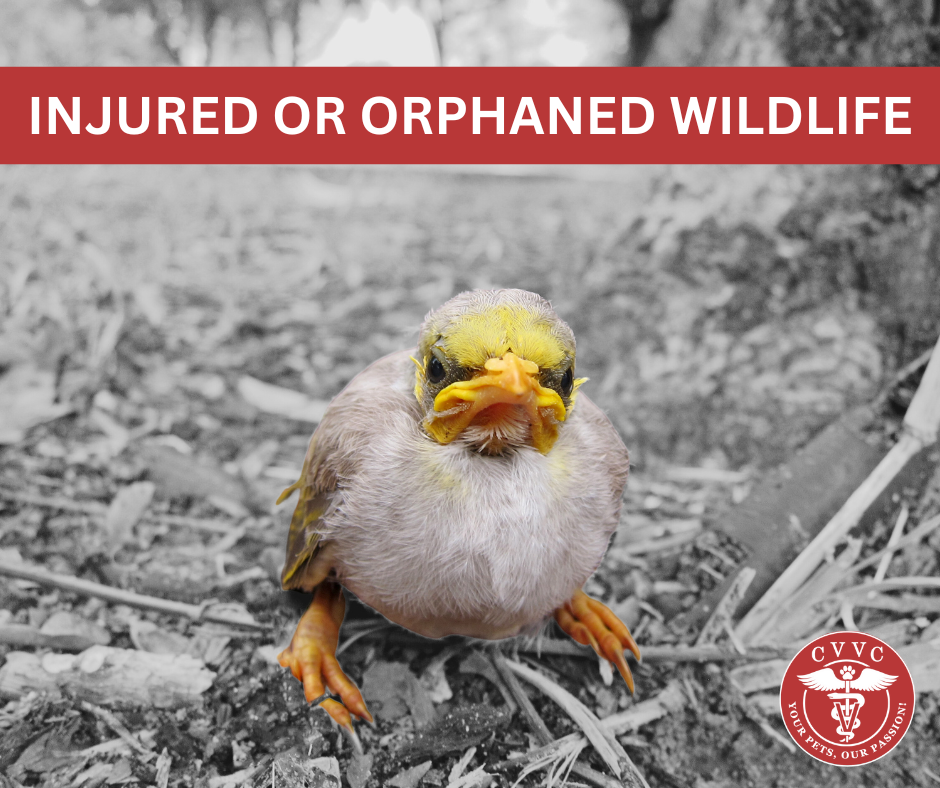
Observe, don’t intervene (yet). Many young animals (like fawns and fledgling birds) appear abandoned but are being cared for nearby.
Check the official guidance: alberta.ca/orphaned-or-injured-wildlife.
This page walks you through whether to leave the animal alone or contact a rehabilitator.Urgent public safety hazard? If the animal is creating a hazard (e.g., in traffic or a public area), call Bylaw Non-Emergency: 403-529-8481.
Immediate danger to people? Call 9-1-1.
Please don’t bring wildlife to our clinic. We’re not licensed for wildlife and cannot accept, treat, or house wild animals.
Common Medicine Hat scenarios (what to do)
Fledgling songbird on the ground (fully feathered, hopping):
Likely learning to fly; parents are nearby. Keep pets indoors and give space. Check alberta.ca for specifics.
Baby hare (leveret) or fawn hidden in grass:
Being left alone is normal. Observe from a distance; only act if there’s an immediate hazard. See alberta.ca for signs of true orphaning.
Obvious injury (wing droop, bleeding, entanglement):
Call a wildlife rehabilitation centre (numbers below) for exact instructions. You may be asked to contain the animal briefly in a ventilated box in a dark, quiet space only if it’s safe and only if advised.
Skunk, fox, raccoon or bat acting oddly (staggering, unusually tame):
Do not handle. Keep people and pets away and seek advice from a wildlife rehab centre.
What not to do
Don’t offer food, milk, or water (this can harm wildlife).
Don’t try home care or keep the animal as a pet (it’s illegal and unsafe).
Don’t move babies unless a rehabber instructs you to do so.
Who to contact (Southern Alberta)
Official guidance (start here):
alberta.ca/orphaned-or-injured-wildlife (step-by-step help and next actions)
Urgent but non-emergency hazards in the city:
City of Medicine Hat Bylaw (Non-Emergency): 403-529-8481
Wildlife rehabilitation centres (advice for songbirds, waterfowl, raptors, small mammals, hares, etc.):
Calgary Wildlife Rehabilitation Society (CWRS): 403-214-1312
Alberta Institute for Wildlife Conservation (AIWC): 403-946-2361
WILDNorth (Edmonton region): 780-914-4118
Medicine River Wildlife Centre (Central AB): 403-728-3467
If one centre is busy, try another—rehabbers coordinate and can redirect you.
Our clinic’s policy (effective immediately)
We do not admit wildlife for any reason (including euthanasia).
We will refer community members to the provincial guidance and permitted rehabilitators.
This protects our exotic patients, our staff, and the public—and supports the best outcome for wildlife.
If you have questions about this policy, please contact our front desk. For wildlife found today, please use the resources above so the animal gets the right help as quickly as possible.